I use AI in my writing and on this site. I don’t want that to be hidden, implied, or treated as a small technical detail.
This site was written and designed with AI assistance, guided by me. The posts are drafted with AI assistance, guided by me. The summaries and artwork are usually generated with AI assistance too, then reviewed and approved by me.
That might make some people suspicious, and I understand why. There is a lot of AI-generated writing around that feels empty. It has the shape of an article without much evidence of a person behind it. It uses phrases like “It’s not X, it’s Y”, “drive alignment”, or “foster innovation” without ever saying anything specific enough to disagree with.
That is exactly what I’m trying to avoid.
The most important thing AI gives me is not the opinion. The opinions are mine. The experience is mine. The judgement is mine. What AI gives me is help turning rough thinking into something readable, and then help checking whether the result still sounds like me.
I have developed a writing skill that is specifically designed to emulate my voice. It has examples of the sort of article I’m trying to write, guidance on tone, and rules about what to avoid. Those rules are always evolving. When I spot a phrase that feels too polished, too generic, or too much like an AI model trying to sound profound, I add it to the guidance. When I write something that feels particularly like me, that becomes a useful reference too.
Some of the rules are quite direct. Avoid corporate cliches. Don’t present me as the hero of every story. Don’t manufacture a simple villain or a tidy lesson when the reality was messier. Don’t use the formulaic “Leadership isn’t X. It’s Y.” construction unless there’s a very good reason. Avoid the neat three-part rhythm that so much generated writing falls into.
That last one matters more than it might sound. A lot of AI writing is technically fine but strangely frictionless. It sets up a point, reinforces it, then lands a tidy final line. It reads smoothly, but it doesn’t feel like a person thinking. My own writing is usually more uneven than that. I’ll qualify something. I’ll admit where I’m unsure. I’ll sometimes leave a tension unresolved because that’s closer to how the work actually felt.
The site itself followed the same pattern. I planned it with AI first: where it would be hosted, what it would be written in, how simple it would be to maintain, and how much ceremony I wanted around publishing. I wanted something lightweight, because I know that if publishing becomes annoying I’ll stop doing it.
AI absolutely helped with the design, but I made the calls. We worked through desktop and mobile views, adjusted the colour scheme, changed spacing, rewrote copy, and tested whether the site felt like somewhere I’d actually want my writing to live. I didn’t want a loud portfolio site or a glossy leadership brand. I wanted something quieter and more useful.
The same is true for individual posts. I usually start with notes. Sometimes they’re fairly structured. Sometimes they’re just fragments: the point I’m trying to make, a few examples, a possible ending, and the bits I definitely don’t want to lose. AI turns that into a first draft, and then I argue with it.
That argument is useful. I’ll reject sections that overclaim. I’ll rewrite anything that sounds too clean. I’ll add the uncomfortable detail that makes the point more honest. I’ll remove lines that feel like they’re trying to impress a hiring manager rather than explain how I think.
After that, I proofread it myself. Then I’ll often ask AI to proofread the final draft and raise suggestions. At that point it’s not in charge. It might spot a repeated phrase, a weak transition, or a place where I’ve implied more certainty than I mean. I decide what changes.
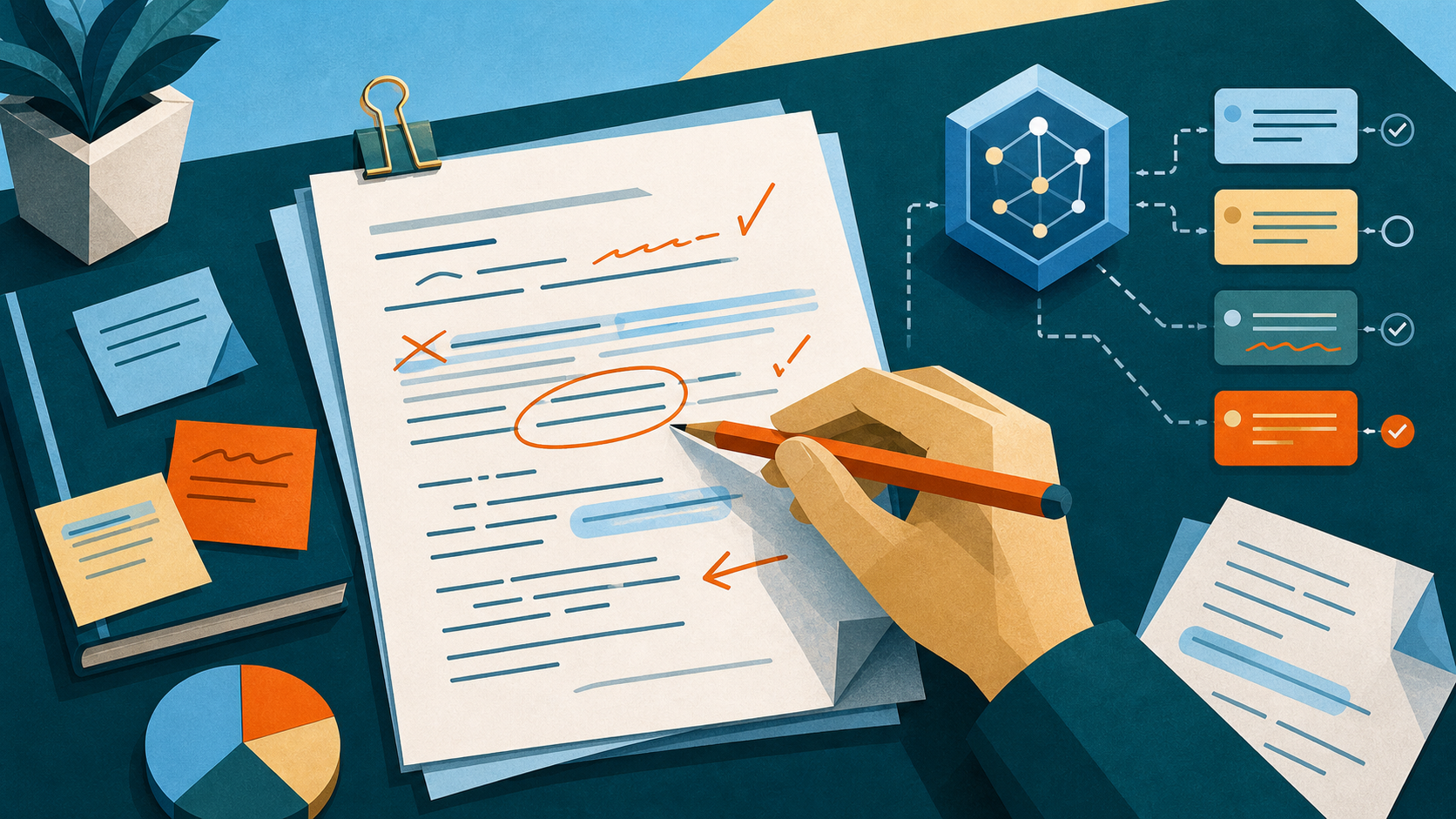
The summary and artwork are handled in a similar way. AI can produce options quickly, but I still approve what gets used. If an image feels like vague motivational wallpaper, it doesn’t go in. If a summary flattens the article into something generic, it gets rewritten.
So when I say AI-assisted, I don’t mean a content factory. I’m not trying to churn out posts for the sake of having posts. I’m using AI as a drafting partner, editor, design assistant, and second pair of eyes.
The standard is still mine. I write the starting point. I shape the argument. I proofread the result. I decide what is good enough to publish.
AI can help bulk out a thought, test the tone, and catch some of the habits I’m trying to avoid. It can’t decide what I believe. It can’t take responsibility for whether the article is worth reading.
That part is still on me.